
Built a Telegram community of a thousand entrepreneurs that earned me around $600 a month from cross-promotion between them.
As a kid I was given a generous allowance — more than enough, by my standards. Then the purse strings tightened, money got noticeably scarcer, and I went looking for ways to earn on the side. My first gig was my mom’s online cosmetics shop: she was just moving online, so I took over the ads. That’s how I got pulled into cross-promo — you find a channel about your own size, similar audience and subscriber count, and you promote each other. I plug you, you plug me.
Pretty soon I came across a project that brought entrepreneurs together in one place, so they could quickly find each other for exactly this kind of cross-promo. Great idea — but the guy running it got full of himself at some point and started throwing his weight around, with everyone, me included. So I thought: why not do the same thing myself? I took his model apart piece by piece and built my own — cleaner, more honest, treating people like people. That alone got better results.
The whole thing lived under the name UzBigMega. Alongside it ran a cross-promo group for one-off deals — nothing fancy: I advertise you, you advertise me. UzBigMega itself ran on digests. I sorted the entrepreneurs’ channels into groups by how active their audiences were, and every day I’d build a digest for each group — around fifty channels — and each night we pushed it out across them. In a digest the valuable slots are the edges: two at the top, two at the bottom, the ones people notice first. Those four slots were what I sold. It came to around $600 a month — serious money for my age in those years, with room to spare.
And then I saw the ceiling myself. Durov launched Telegram Ads, channel activity began to slide, and with a recession all around, it was clear the model was running out of road. But one thing I understood firmly back then, and still carry with me: to get chosen, it’s enough to be more honest, kinder, and to work in good faith. I just talked to clients like human beings — that’s the whole secret.
I’d outgrown my hometown of Almalyk. I took my two bravest friends, and the three of us set out to conquer the capital.
By then UzBigMega had given me both money and self-esteem — enough to feel invincible. My ambitions were enormous, yet there I was, still in Almalyk, the town where I was born, knowing full well I’d outgrown it. That’s when the nagging thought set in: move to the capital.
I picked the two bravest from my circle, and the three of us split one apartment in Tashkent. Around the same time I took up paid ads — teaching myself, and training others for free along the way: those two, plus seven or eight guys from back home. I was finding my feet and waiting for our first clients to come in.
I traded, too. My dad lent me a starting thousand dollars; I meant to grow it, but in practice crypto just bankrolled our life in the capital — nights out and food for three. On futures I made about two grand, or so the banking app said. As for my dad’s thousand, I lost it in a single night when the market crashed: I’d opened a dozen or so trades, foolishly fell asleep without closing them, and woke up with nothing.
By the end of that summer I finally finished learning and landed my first clients — small retail brands, clothes and cosmetics. The pay was decent back then; the profession hadn’t gone mainstream yet. I still steered clear of the big accounts — that’s a story of its own. My brave friends, though, didn’t last: they had no real fire, picked things up slowly, and went back home.
By autumn I’d been packed off to a private Tashkent school. My sisters moved over next, and we started living together — they studied at their universities, I went to a school near the apartment. But school quickly lost out to work: I skipped more than half my classes, and got expelled for it. I more or less traded my diploma for a career.
A big contract fell through because of school. Then I lost UzBigMega, and everything came apart.
After the expulsion, I was sent to the school assigned to my address. Life felt like it had hit pause. I had four or five projects, clients coming and going; the paid-ads market was getting saturated and prices were sliding, though mine held up on experience. Six months passed without a ripple — new school, new faces, I barely even skipped. And I barely grew.
Then came a chance to move up from paid ads into marketing. A German company reached out: they bought up out-of-season branded goods across Europe, heavily discounted, and resold them in other markets, Uzbekistan among them. They put the whole strategy in my hands — every dollar my responsibility — and paid around three grand. For me, it was a step into the big leagues. But because of school, it fell through.
And that broke me. Everything piled up at once, and the rough patch set in. In that state I dealt the final blow myself: I tore UzBigMega down. Why? I still don’t know. Then I simply stopped going out — sat at home, read, lost myself in games, and put myself back together piece by piece.
A year later I tried again. A sellers’ school for Uzum: big budgets on paper, a fraction of that in reality, and they loaded everything onto me, down to manning the reception desk. I walked. Then a leisure venue — it was all moving toward a contract, until the owner found out how old I was and turned me down right there on the doorstep. I didn’t try again after that; I sank into real depression. Climbing out of it would take something completely different.
Climbing out was long and crooked — video editing, a couple of short-lived jobs, a partnership that didn’t pan out. In the end I sat down to build on neural nets, alone.
I started climbing out in an odd way: video editing. In the summer of 2025 I was suddenly drawn to it and spent the whole season on it, and by autumn I’d landed at a great studio. They made sharp, witty news segments, and on special occasions, about once a week, they delivered the news as a song. A lot of Uzbek celebrities worked with them — I’d never seen a better place for networking. That’s where I took my editing to a serious level and learned to shoot on a professional camera.
A month later, payday came, and they handed me a third of it, with none of the promised bonus. And I’d carried a lot of people there, working twice as hard as my teammate; when he was let go, they promised me half his salary on top, then gave me nothing. I raised it a couple of times, they dug in, and I left. They called back: we’ll pay it all, we’ll raise your salary, the terms are genuinely good. The place really was the best I’d seen — but cheat me once and you’ll cheat me again, and on top of that they badmouthed ordinary people behind their backs. I didn’t go back.
Then Cyberium called — a well-known computer club in Tashkent. The terms were terrific: a big salary, everything covered down to meals, a friendly team. I lasted exactly one day: the very meal they covered gave me food poisoning so bad my stomach barely worked for a week. I took it as a sign and didn’t go back.
Closer to winter, I ran into old friends by chance — the same two who’d gone into marketing long ago and were now at it full-time. We teamed up to build something of our own: a marketing company. It dragged from January to the end of March and never got off the ground. I handed out the tasks and dug into neural nets on the side, but everything stalled — maybe the guys had too much else on their plates, maybe we just weren’t on the same tempo. In early May I decided to stop and work on my own. And honestly, the blame is mostly mine: I was responsible for the company and failed to build it. I could have seen it sooner and left sooner, but out of inexperience I stayed and kept the faith to the end. No great loss, but time gone.
And yet the time wasn’t wasted. Through all the stalling I never let go of neural nets, and for the first time in ages I felt solid ground under my feet. Right now I’ve got three or four projects; I’ve been building in earnest for the last couple of months, and before that I was deep in the theory. There’s a separate page with the projects in detail — each has its own story, its own soul, and I really do recommend a look. What will grow out of them, time will tell. But I’m building something of my own again, and only my own, beholden to no one — and that already counts for something.
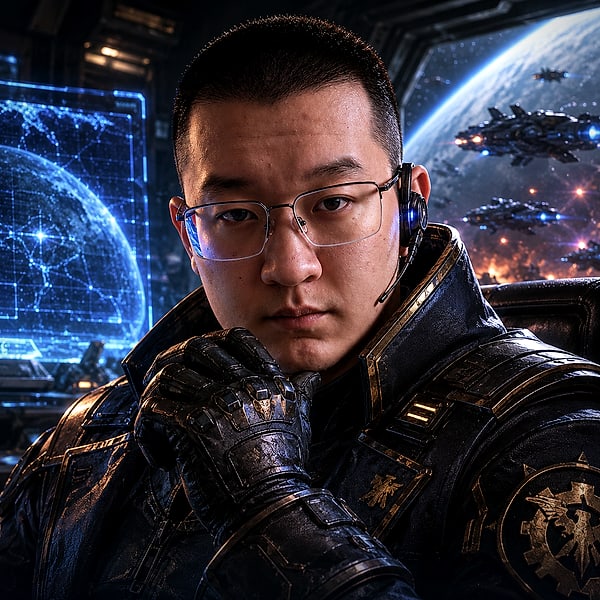
Why neural nets, honestly: with them I can do so much myself — and take on what I never could before.
Why neural nets? Honestly, I see the future in them, and I don’t see another path for myself — otherwise I’d fall badly behind.
But the real point, for me, is something else: with neural nets I can do so much on my own. Before, almost everything ran into other people — I needed a team, other hands, other people’s time. Now a neural net handles nearly everything I need: solidly, dependably, sometimes even brilliantly, though it rarely comes out perfect. For the first time the ceiling is gone — I do things I couldn’t before, and many times faster.
So — here I am: someone who fell again and again and learned to get back up, and who’s finally found something to stand on. What will come of it, we’ll see. But for the first time in a long while, I’m genuinely curious what happens next.