Personal site and tool
The site
The site is a face, not a sales landing page. The home page is “nice to meet you.” Projects is what I do. Audit is a separate door for those who want a business breakdown.
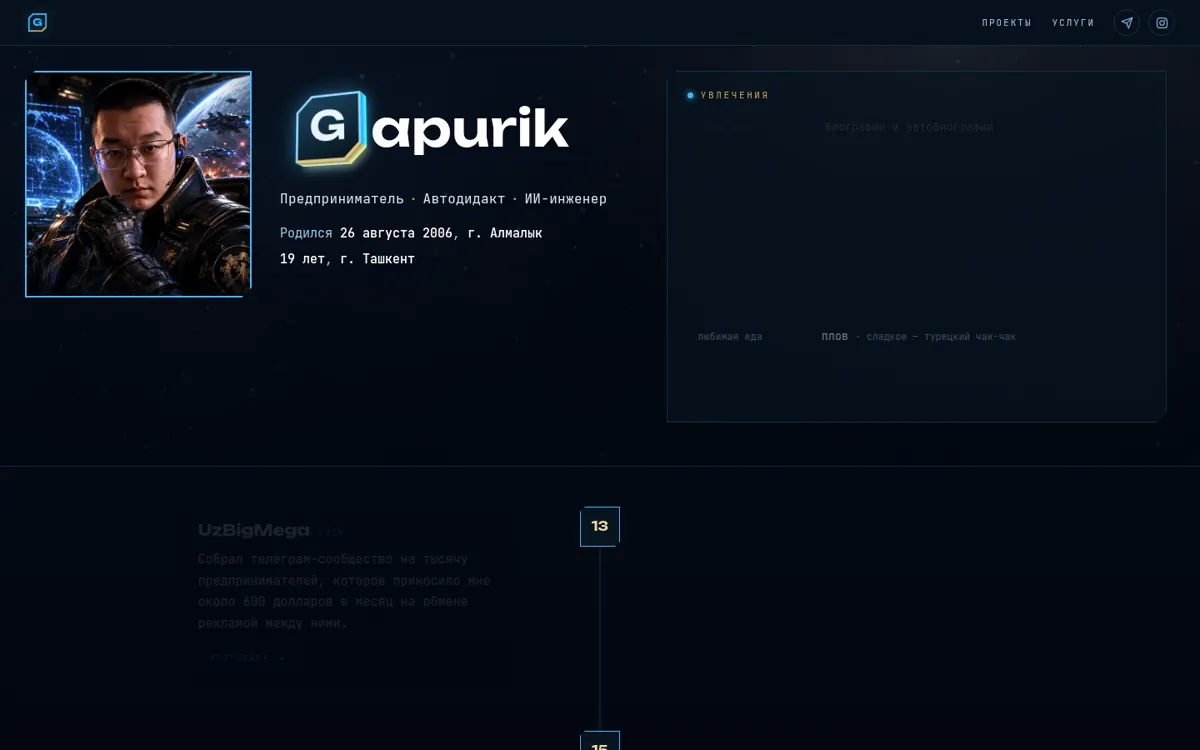
/A personal page: photo, a short bit about me, date of birth, city, what I do, a timeline of my life, interests.
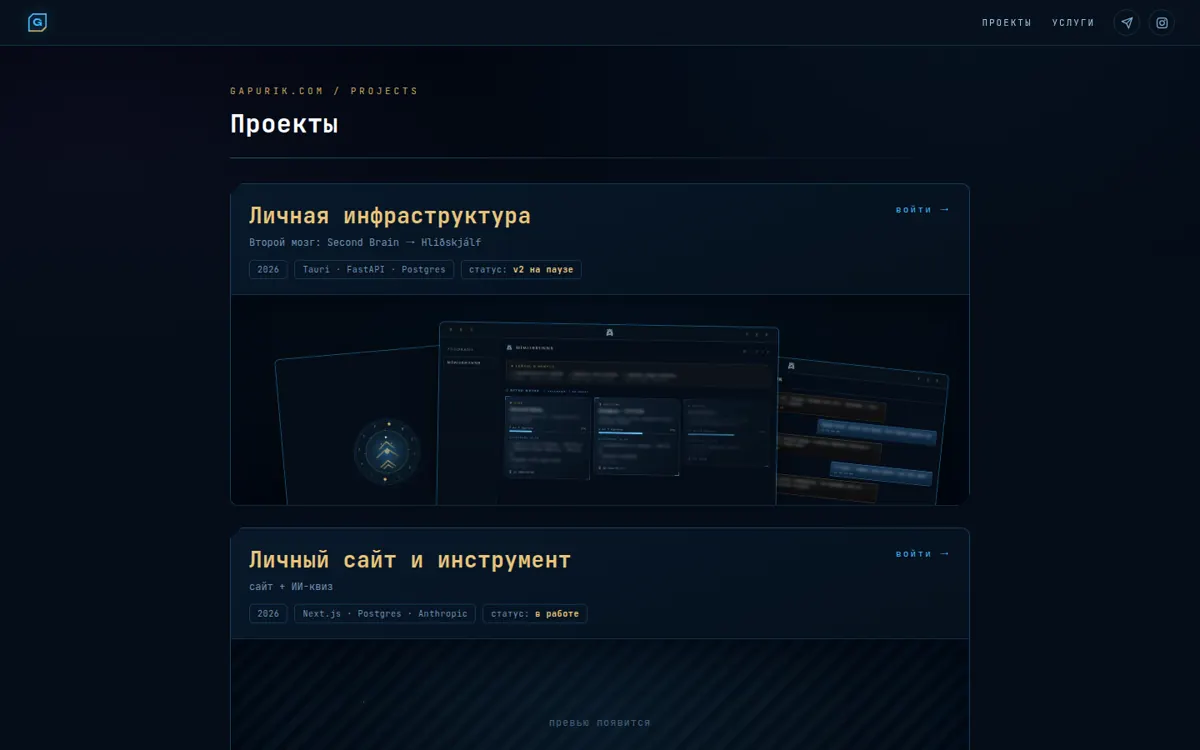
/projectsA list of projects: personal infrastructure, this page, RPGameBot. Each one has its own subpage with a write-up.
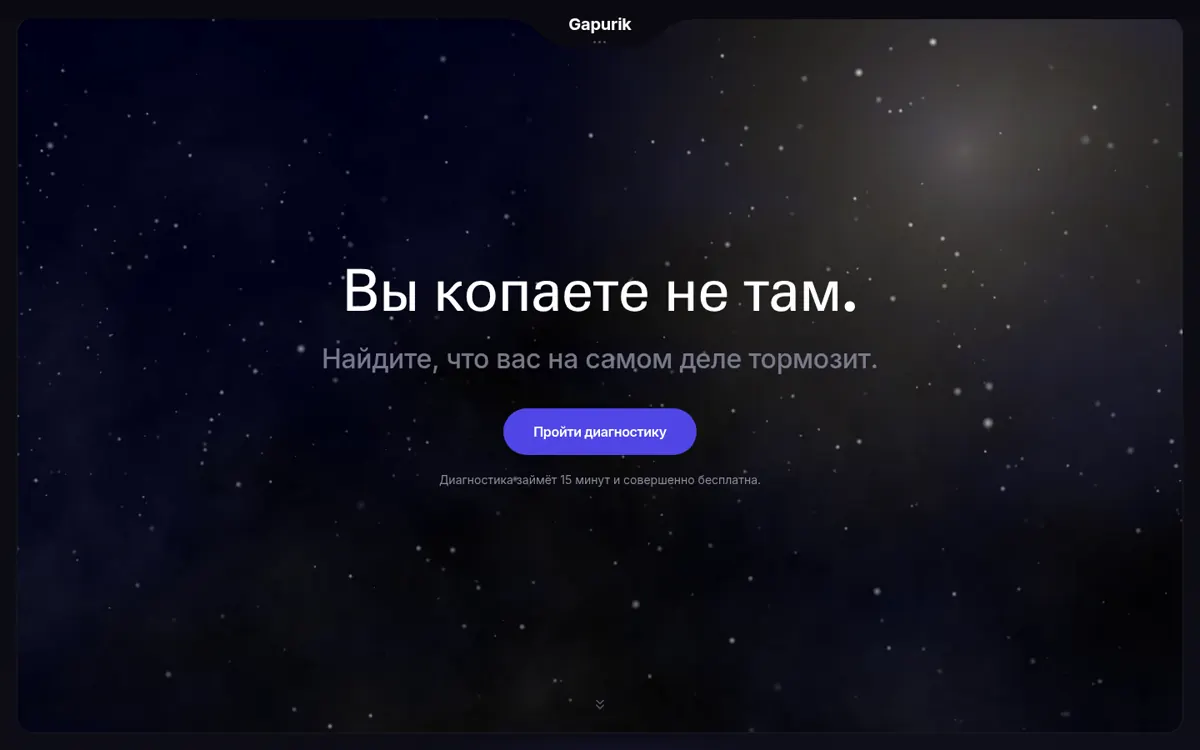
/auditThe landing page for the diagnostic quiz: what pain it solves, who it’s for, what the client walks away with, and how going through it works.
Quiz
When a small-business owner in Uzbekistan asks an AI “what should I do,” they get a generic answer about the US and Europe. The benchmarks are someone else’s, the advice is shallow, the local market isn’t taken into account.
A narrow quiz. Separate for three industries. Several AI stages, each with its own context and role. The benchmarks are real, gathered from publicly available Uzbek sources, and they get better with every run (we’ll also expand them in the future with paid sources).
The facts
The user’s path
The best of the project
The benchmarks grow along with the database
On top of the existing ones from publicly available Uzbek sources, dynamic quartiles from real runs are added. With each new user they get more accurate.
Adapts in real time
The quiz shifts as you go: the direction is chosen from the first answers, the text and options adjust to the business type, and numeric questions appear only when there’s a point in asking them.
Moving toward any business type in Uzbekistan
Today there are three tracks (e-com / services / b2b) with subtypes and profiles inside each. The goal is for any business in Uzbekistan to recognize itself in the report. Each version is more accurate.